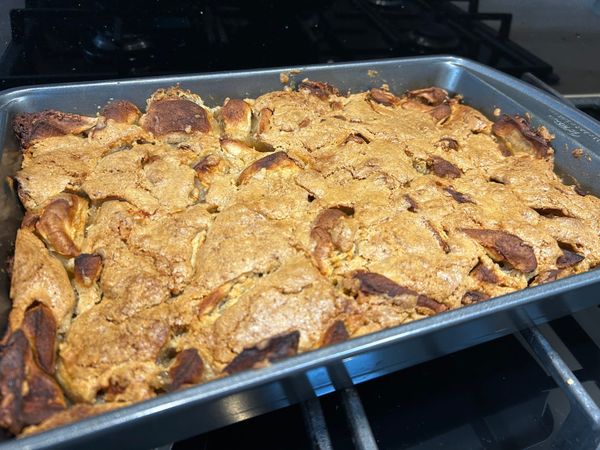
I just poached an egg. I just poached a proper grown up actual poached egg. Now let me tell you something about poached eggs: I can't cook them. Let me tell you something else: I bloody love poached eggs, me. So much so, that I keep a little league table of bloody brilliant poached eggs. It looks like this:
1. Shangri-La Rasa Ria, Kota Kinabalu, Borneo, 18th May 2008.It was the second best poached egg I've had, taste wise, but it comes out on top because of the mise en scène: I was on honeymoon, it was on room service, there were orangutans just outside. That's pretty good going, right?2. Bedford Lodge Hotel, Newmarket, 10th April 2010.The morning after our friends Andy & Claire had got married, so a lovely occasion anyway, but with the added benefit of the best poached eggs I've ever tasted.3. My House, Birmingham, 23rd August 2010.Literally just a few minutes ago I made amazing poached eggs, that didn't split all over the shop, they looked pretty and tasted amazing.
When we teach students about textual analysis we often talk about "context" and how that can help shape meaning. By that we mean things like how someone comes to a media text (a TV programme, a film, a song, a newspaper article etc.), how and where they are consuming it, what their personal background is, and what the political and social backdrop is to them being presented with the text. Generally speaking, we media teachers contend that all of these things help individuals to make meaning from texts.
When I was in China last week, I came up with a good allegorical story for this: my chicken sauce story.
Everywhere I went in China, people wanted to feed me. Not because I'm wasting away, but because that's what you do with guests who have crossed twelve time zones to come and have a chat with you. I think we all know that the Chinese food we have in the UK is anglicised, and also that generally speaking it represents a sub-set of Chinese cuisine (most of the Chinese food we eat in the UK is based on Cantonese cookery, with a few other specialities thrown into the mix).
By the time I visited Jiatong University, Shanghai I'd tried a lot of food that I'd never come across before. Every meal was a mini-adventure. What would be the latest dish to make me say "wow"? How brave would I be when confronted with a goose's foot, or a chicken with it's head on? What the hell is this dish? We had a superb meal at Jiatong's Faculty Club (the staff dining room - we used to have one at BCU, but it's now a conference hall... it was never as good as the Faculty Club though). The meal included a very simply presented chicken. With it's head on. The chicken was accompanied by a mysterious sauce.
Quite thick, but starting to separate, the sauce had a kind of beige brown colour. "Good chicken - try the sauce" my colleague Duncan told me. "Wow, that's nice, what is it?" I asked. "No idea... but I like it". We debated what it might be. It looked like it might have some sort of peanut base, like a satay, but it didn't really taste of peanut. It wasn't spicy, that was for sure. On the third taste I worked it out: it was chicken gravy.
A bit of flower added to cooking juices, and warmed through. Unmistakeable. Only we had mistaken it, because the chicken had a head on, we were in Shanghai, half the people at our table didn't speak English, and we were being served it alongside a variety of other weird and wonderful dishes. Something so obvious was discounted before I started, and I moved on to consider other, more exotic angles. The context of this meal made me come at gravy from a new angle. And you know what? It was great gravy.